The Dominican Republic keeps pulling ahead as the Caribbean’s top spot for foreign investment, and the smart money is already looking at which spot will be the game-winner. Whether tourism real estate catches your eye, free trade zone manufacturing makes sense for your business, or you see potential in renewable energy, finding the best places to invest in the Dominican Republic in 2026 comes down to understanding what each region actually delivers. This guide covers the top investment locations, the legal protections that matter, and the specific incentives that can meaningfully improve your returns. Punta Cana’s tourism growth, Santiago’s industrial base, the numbers behind each option—it’s all here, along with how to structure things properly.
Why the Dominican Republic works for foreign investment in 2026?
The Dominican Republic hit 4.7% GDP growth in 2024, outperforming most of Latin America. Projections for 2026 sit at 4.5-5%. This isn’t luck. It’s the result of policies built specifically to attract foreign capital while keeping the macroeconomy stable.
The legal foundation comes from Law 16-95 on Foreign Investment, which guarantees equal treatment for foreign and domestic investors, allows free capital repatriation, and gives foreign investors access to local credit markets. The Centro de Exportación e Inversión de la República Dominicana (CEI-RD) is the official investment promotion agency, providing one-stop services for investor registration and incentive applications.
A few things make 2026 timing particularly good:
- Over $2.5 billion in road, port, and airport improvements will finish between 2025-2027
- Companies relocating supply chains from Asia are choosing Dominican free trade zones at an increasing rate
- Tourism arrivals should exceed 10 million visitors in 2026
- The government’s commitment to 25% renewable energy by 2025 has opened up new investment categories
Best places to invest in the Dominican Republic 2026: Tourism and Real estate
Tourism real estate remains the flagship sector, but where you buy changes everything about your returns. Here’s where serious investors are putting their money:
Punta Cana and Bávaro
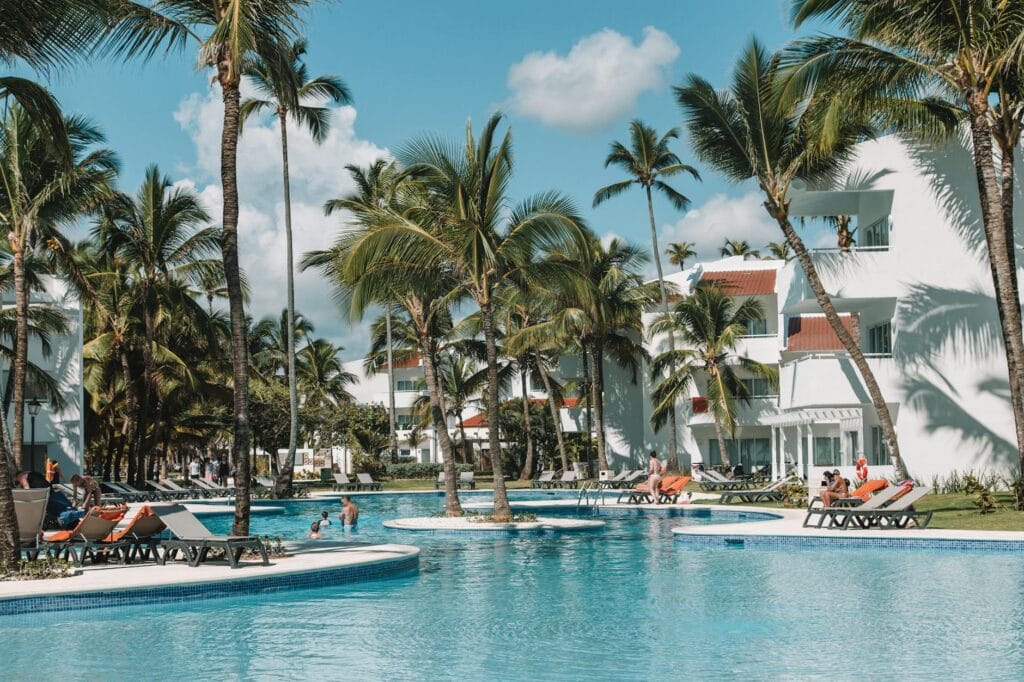
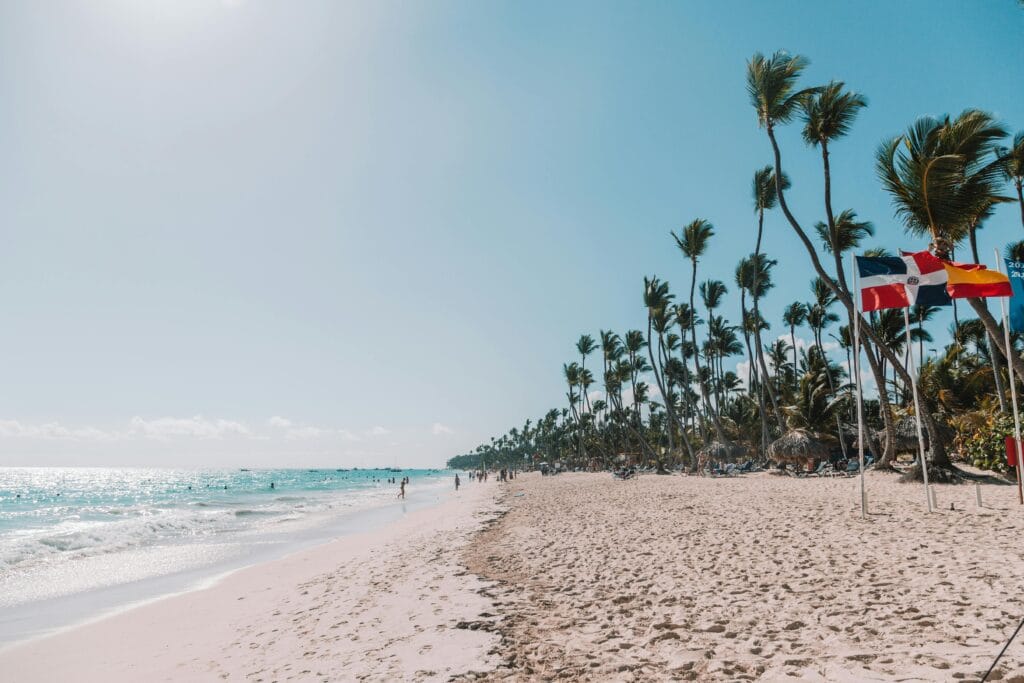
The eastern corridor dominates Caribbean tourism. La Romana-Punta Cana’s international airport handles over 4 million visitors annually. You can get into the market with condo-hotel units starting around $150,000, or go bigger with resort developments.
Law 158-01 on Tourism Incentive offers substantial benefits for qualified projects in designated tourism zones:
- 100% income tax exemption for up to 15 years
- 100% exemption from import duties on construction materials and equipment
- 100% exemption from property transfer taxes (ITBIS)
Here’s the catch: projects need certification from the Ministry of Tourism (MITUR) and must meet minimum investment thresholds, typically $1 million for new hotel developments. The approval process can take several months, so factor that into your timeline.
Las Terrenas and the Samaná Peninsula
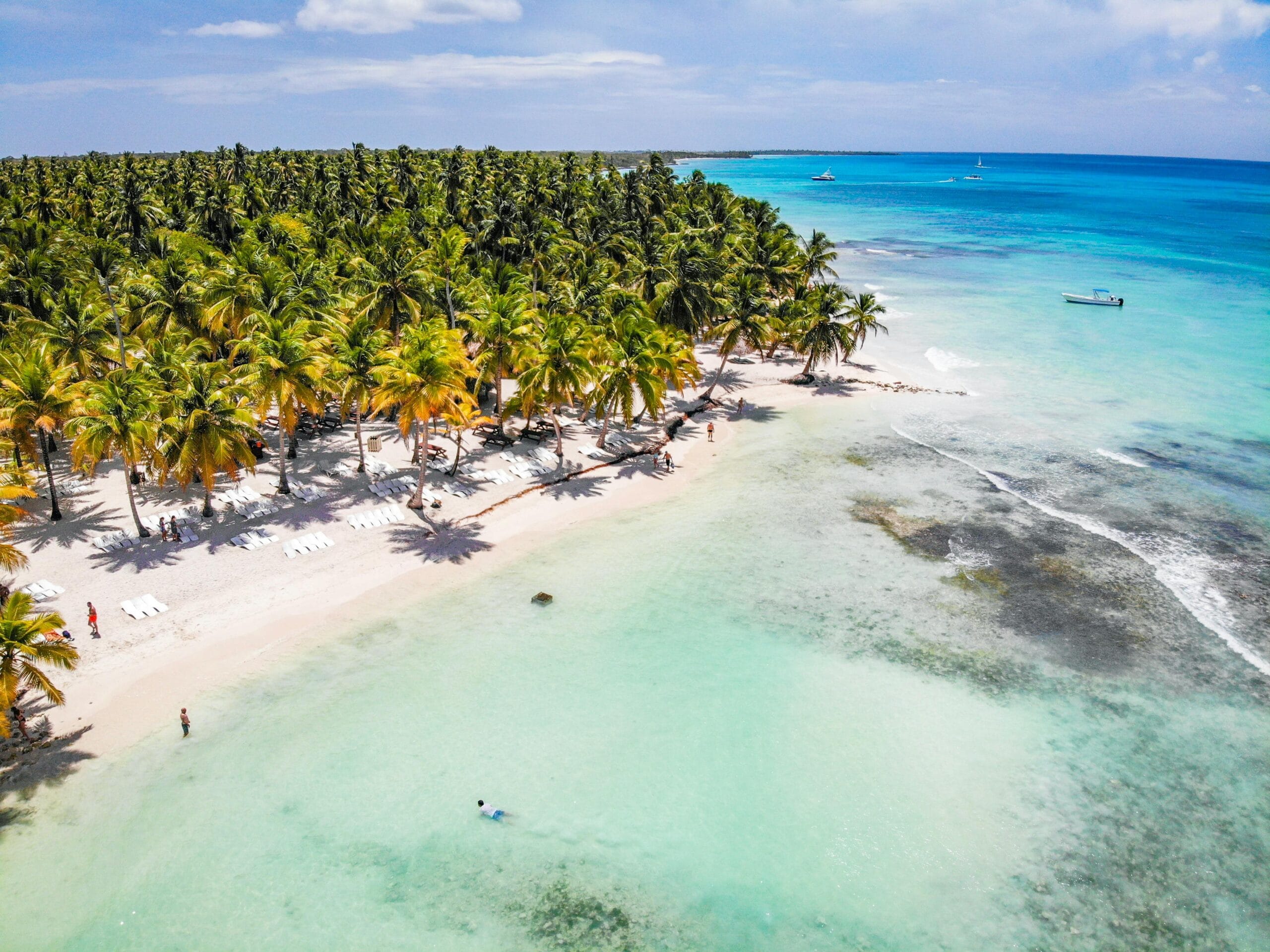
This northeastern region is where the luxury market is heading. European investors have been particularly active here, focusing on boutique hospitality and eco-tourism projects. Property values have climbed 12-15% annually over the past three years. Beachfront land goes for $300-600 per square meter.
The new Samaná highway, finished in 2024, cut travel time from Santo Domingo to under two hours. That’s accelerated development while the area still feels exclusive. Whether it stays that way is another question.
Puerto Plata and the north coast
Puerto Plata underperformed for years. That’s changing. Carnival Cruise Line’s $85 million port development, Taíno Bay, has turned the city into a cruise destination, and that creates opportunities in retail, excursions, and hospitality that didn’t exist before.
Investors can access our free legal tools to check property title status and explore corporate structuring options for real estate holdings.
Industrial and manufacturing zones: the free trade zone advantage
The Dominican Republic runs 83 free trade zones employing over 180,000 workers. It’s the largest free zone system in the Caribbean. Law 8-90 on Free Trade Zones creates one of the hemisphere’s most competitive manufacturing environments, and that’s not promotional language—the numbers back it up.
Santiago de los Caballeros
The country’s second-largest city anchors the Cibao industrial corridor. Major zones here include PIISA and Zona Franca Santiago. Traditional strengths in textiles and tobacco have expanded to medical devices, electronics assembly, and call centers.
Incentives under Law 8-90:
- 100% corporate income tax exemption
- 100% exemption from import duties on raw materials, equipment, and machinery
- 100% export tax exemption
- Municipal tax exemption
- Free profit repatriation
A typical light manufacturing operation can get started in a Santiago free zone for $500,000-2 million, with operational costs running 40-60% below comparable U.S. facilities. That cost differential is why nearshoring interest keeps growing.
Santo Domingo and the National District
The capital region hosts specialized free zones for services, logistics, and technology. Las Americas Free Zone near the international airport has become a pharmaceutical distribution hub. Itabo Industrial Free Zone works for companies needing proximity to Caribbean shipping routes.
For technology companies, Decree 539-05 created the Parque Cibernético de Santo Domingo, with additional incentives for software development, BPO services, and digital businesses.
Best places to invest in Dominican Republic 2026: renewable energy
The Dominican energy sector offers real opportunities as the country pursues its renewable targets. Law 57-07 on Renewable Energy Incentives provides the framework, and the natural resources are genuinely good.
Key investment regions
Monte Cristi and the northwest has exceptional wind resources. Average wind speeds of 8-9 m/s put this region on par with top European wind sites. Major wind farm developments are already operational here.
Azua and the southwest gets high solar irradiation (5.5-6.0 kWh/m²/day), supporting utility-scale solar installations. Several projects exceeding 50MW are in development.
Law 57-07 incentives include:
- 100% exemption from import duties on renewable energy equipment
- Tax credits of up to 40% of investment costs
- Accelerated depreciation on renewable assets
- Net metering provisions for distributed generation
Project approval requires coordination with the Comisión Nacional de Energía (CNE) and Superintendencia de Electricidad (SIE) for generation licenses and grid connection agreements. This process takes time and patience. Budget accordingly.
Practical steps to secure your investment
Regardless of sector or location, foreign investors need to follow established procedures. Skip these steps at your own risk.
Corporate structuring
Most foreign investors operate through a Sociedad de Responsabilidad Limitada (SRL), the Dominican equivalent of an LLC. Formation requires registration with the Cámara de Comercio and tax registration with the Dirección General de Impuestos Internos (DGII).
Processing typically takes 15-20 business days. Costs run $1,500-3,000 including legal fees, depending on complexity.
Due diligence requirements
For real estate, title verification through the Jurisdicción Inmobiliaria (Land Registry Court) is non-negotiable. The Dominican Republic uses a Torrens title system that provides strong ownership protections, but only for properly registered properties. Unregistered or informally held land is a different story entirely.
For business acquisitions, commercial due diligence should cover:
- Tax compliance verification with DGII
- Labor liability assessment (Dominican labor law favors employees heavily, so know what you’re inheriting)
- Environmental permits review with the Ministry of Environment
- Intellectual property status through ONAPI (National Industrial Property Office)
Banking and finance
The Banco Central de la República Dominicana maintains stable monetary policy with the peso trading in a managed float. Foreign investors can open corporate accounts in both pesos and U.S. dollars at major institutions including Banco Popular, Banreservas, and Scotiabank.
Currency conversion and repatriation face no restrictions under Law 16-95. Transactions exceeding $10,000 require source documentation under anti-money laundering regulations, which is standard practice throughout the region.
Key takeaways
- Tourism real estate in Punta Cana, Las Terrenas, and Puerto Plata offers strong returns backed by Law 158-01 incentives, including 15-year tax exemptions
- Free trade zones in Santiago and Santo Domingo provide comprehensive tax benefits under Law 8-90, making them well-suited for manufacturing and services
- Renewable energy investments benefit from Law 57-07 incentives including 40% tax credits and duty-free equipment imports
- Law 16-95 guarantees equal treatment, free profit repatriation, and legal protections for foreign investors
- Proper corporate structuring through SRL formation and thorough due diligence matter regardless of investment sector
- 2026 timing works well given infrastructure completion, nearshoring trends, and tourism growth
Finding the right location is only the beginning. Execution, legal structure, regulatory compliance, and planning determine whether your investment succeeds. The Dominican Republic rewards investors who understand its legal framework and regional differences.
Frequently asked questions
What are the best places to invest in the Dominican Republic in 2026?
The top investment locations in 2026 are Punta Cana and Bávaro (tourism real estate with Law 158-01 tax exemptions), Las Terrenas and the Samaná Peninsula (luxury and eco-tourism, 12–15% annual property appreciation), Puerto Plata (emerging cruise tourism hub), Santiago de los Caballeros (free trade zone manufacturing under Law 8-90), and the renewable energy corridors of Monte Cristi and Azua.
What tax incentives are available for foreign investors in the Dominican Republic?
Three main incentive regimes apply: Law 158-01 offers tourism projects up to 15 years of 100% income tax exemption and import duty exemptions; Law 8-90 gives free trade zone companies full exemptions from corporate income tax, import duties, export taxes, and municipal taxes; Law 57-07 provides renewable energy investors tax credits of up to 40% of investment costs and duty-free equipment imports.
Can foreign investors repatriate profits from the Dominican Republic?
Yes. Law 16-95 on Foreign Investment guarantees foreign investors the unrestricted right to repatriate 100% of their profits and capital in foreign currency. There are no exchange controls limiting repatriation. Transactions exceeding $10,000 require source documentation under standard anti-money laundering regulations.
What is the minimum investment required to qualify for tourism incentives in the Dominican Republic?
Tourism projects under Law 158-01 typically require a minimum investment of $1 million for new hotel developments in designated tourism zones. Projects must obtain certification from the Ministry of Tourism (MITUR) before construction begins — applying after the fact disqualifies you from incentives. Processing can take several months.
What corporate structure should foreign investors use in the Dominican Republic?
Most foreign investors use a Sociedad de Responsabilidad Limitada (SRL), the Dominican equivalent of an LLC, under Law 479-08. Formation requires registration with the Cámara de Comercio and tax registration with the DGII. The process takes 15–20 business days and costs $1,500–3,000 in legal fees depending on complexity. Use our Company Formation Cost Estimator for a detailed breakdown.
Ready to explore your investment options with professional guidance? Connect with a Dominican attorney at Dominican Legal Hub to discuss your specific objectives, evaluate opportunities, and structure your investment properly.
Last verified: April 2026. Dominican law changes periodically — consult a qualified attorney before acting on this information.