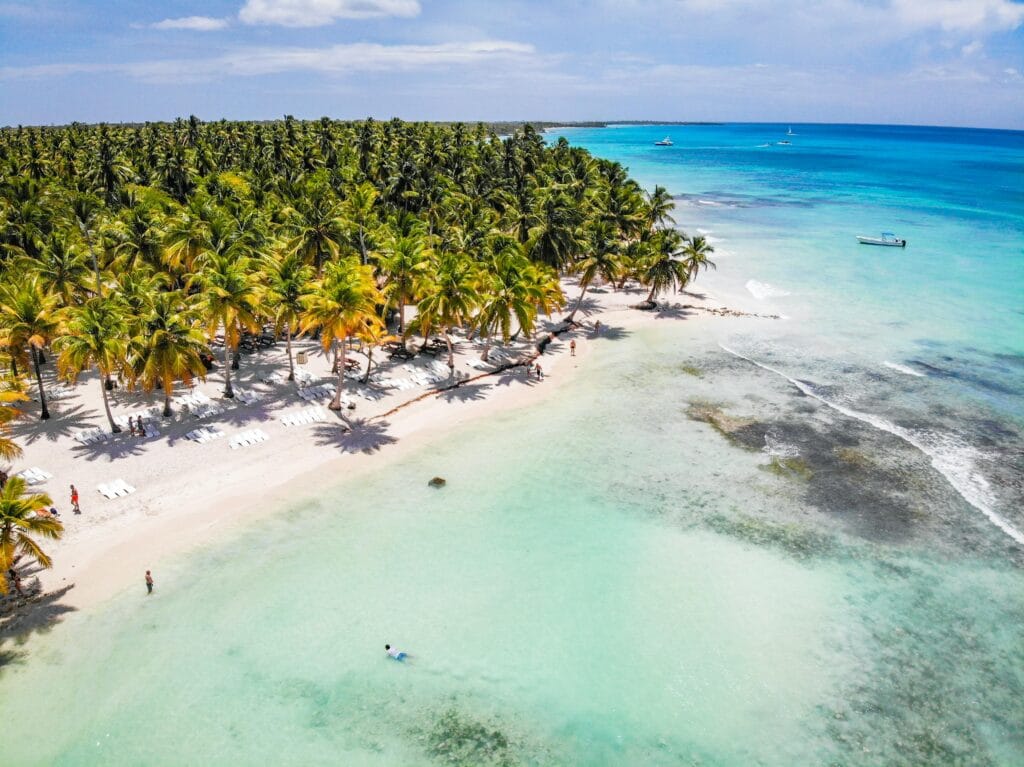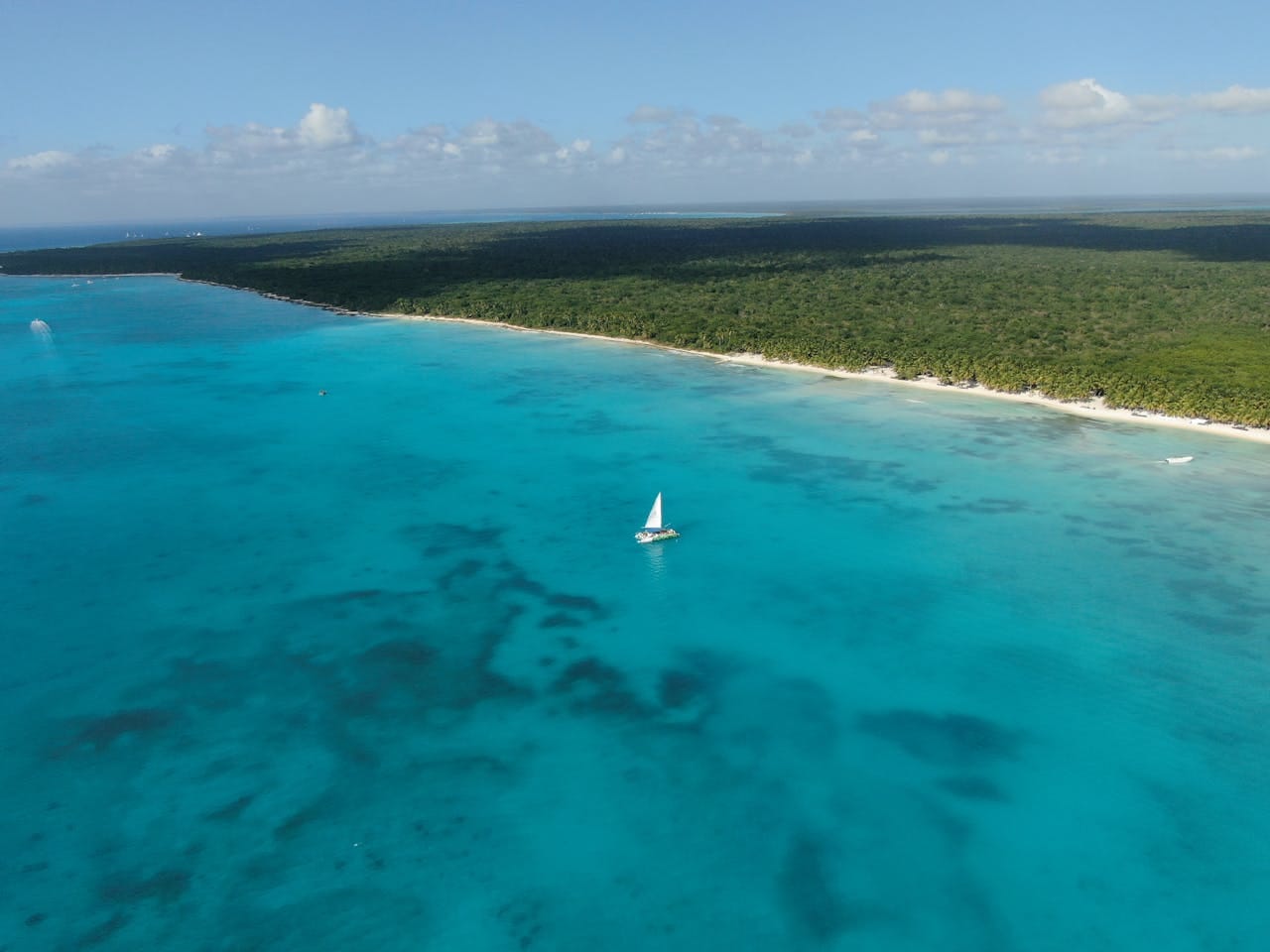
Whenever an investor is looking for new and top destinations to invest in the Caribbean, often it comes to mind two destinations where should you invest: the Dominican Republic and Mexico. The Dominican Republic vs Mexico investment comparison comes down to two distinct legal philosophies: the Dominican Republic operates under Ley 16-95 (Foreign Investment Law) guaranteeing 100% foreign ownership in most sectors with no minimum capital requirements, while Mexico imposes constitutional restrictions under Article 27 prohibiting direct foreign ownership of land within 50 kilometers of coastlines and 100 kilometers of borders—requiring fideicomiso trusts that add $500–$2,000 USD annually in bank fees. For Caribbean-focused investments, the Dominican Republic offers faster company formation (3–5 business days), a lower corporate tax rate (27% vs. Mexico’s 30%), and direct property ownership rights that Mexico simply cannot match in its coastal zones.
This comparison matters because investors routinely conflate “Latin America” and “Caribbean” opportunities, missing jurisdiction-specific advantages that can mean the difference between a 15% and 25% effective tax burden, or between direct title ownership and a 50-year renewable trust. Mexico’s larger economy creates the illusion of superior opportunity, but for tourism, real estate, export manufacturing, and services targeting the U.S. East Coast, the Dominican Republic’s legal infrastructure, geographic position, and incentive regimes frequently come out ahead. Getting this wrong means overpaying taxes, accepting unnecessary ownership restrictions, or missing sector-specific incentives worth millions on larger projects.
Legal Framework Comparison
The foundational difference between these two jurisdictions is how each treats foreign capital at the constitutional and statutory level.
Ley 16-95 (Ley de Inversión Extranjera) establishes national treatment for foreign investors in the Dominican Republic—foreigners receive identical legal rights to Dominican nationals in most sectors. Article 2 explicitly permits 100% foreign ownership of Dominican companies without requiring local partners. There are no minimum investment thresholds for general business activities, and repatriation of profits and capital is guaranteed without prior government approval under Article 4.
Mexico’s Ley de Inversión Extranjera (1993) permits foreign investment but carves out significant restrictions. Article 27 of Mexico’s Constitution—a provision dating to 1917—prohibits foreigners from directly owning land in the “restricted zone” (50km from coasts, 100km from borders). This covers virtually every desirable tourism and beachfront investment location. Foreigners must instead use a fideicomiso bancario (bank trust) lasting 50 years (renewable), adding approximately $500–$2,000 USD in annual trustee fees depending on property value.
Mexico also reserves certain sectors entirely for Mexican nationals or the state: petroleum, basic petrochemicals, electricity, nuclear energy, and radioactive minerals. The Dominican Republic has fewer reserved sectors—primarily national security, toxic waste disposal, and activities explicitly prohibited by law.
For investors working through the Dominican Republic vs Mexico investment decision, this ownership distinction alone can justify jurisdiction selection. Direct fee-simple title in the Dominican Republic provides certainty that trust-based ownership cannot replicate, particularly for generational wealth transfer or using property as loan collateral.
Corporate Formation and Operational Costs
Speed and cost of market entry differ substantially between these two countries, and the gap is wider than most investors expect.
In the Dominican Republic, a Sociedad de Responsabilidad Limitada (SRL) can be registered in 3–5 business days through the Cámara de Comercio and subsequently with the DGII (tax authority). Minimum capital is RD$100,000 (approximately $1,700 USD), which need not be deposited in a bank—only declared. Formation costs including legal fees typically run $800–$1,500 USD. The RNC (tax ID) issues the same day upon submission of complete documentation.
In Mexico, a Sociedad de Responsabilidad Limitada (S. de R.L.) or Sociedad Anónima (S.A. de C.V.) requires 2–4 weeks at minimum, often stretching to 6–8 weeks. The process involves obtaining authorization from the Secretaría de Economía for the company name, executing the deed before a notary public (fedatario), and registration with the SAT (tax authority). Formation costs typically run $1,500–$3,000 USD due to mandatory notarial involvement. Mexico has no minimum capital requirement for S. de R.L. structures, but notarial and registration fees are substantially higher.
Annual compliance costs reflect the same pattern. In the Dominican Republic, corporate tax filings, municipal taxes (IVSS), and basic accounting run $1,200–$2,500 USD annually for a small-to-medium enterprise. Comparable compliance in Mexico runs $2,000–$4,000 USD annually, with more complex monthly VAT and withholding obligations layered on top.
To estimate your total setup and first-year operational costs in the Dominican Republic, use our free legal tools to generate preliminary budgets before engaging counsel.
Taxation: Corporate Rates and Incentive Regimes
Tax efficiency often determines investment viability, and here the Dominican Republic holds measurable advantages.
On corporate income tax, the Dominican Republic charges a flat 27% rate under the Código Tributario (Ley 11-92, as amended by Ley 253-12). Mexico charges 30% flat under the Ley del Impuesto sobre la Renta. That 3-percentage-point gap compounds on profitable operations—a business generating $1 million USD in annual taxable income saves $30,000 USD per year by operating from the Dominican Republic rather than Mexico, before factoring in incentive regimes.
The Dominican Republic’s Ley 8-90 (Zonas Francas) is one of the more investor-friendly export frameworks in the Caribbean: 100% exemption from corporate income tax for qualifying entities, plus exemption from import duties, ITBIS (VAT), and municipal taxes. Over 600 companies operate across 70+ free trade zones. Current FTZ opportunities are listed through ProDominicana (CEI-RD), the official investment promotion agency.
Mexico’s IMMEX (Maquiladora) program offers manufacturing exporters duty deferral rather than exemption, with complex compliance requirements around rules of origin and documentation. Useful for certain operations—but not as clean a benefit as the Dominican FTZ exemption.
On tourism specifically, Ley 158-01 (CONFOTUR) exempts qualifying Dominican tourism projects from income tax for 10–15 years, plus exemption from transfer taxes, import duties on construction materials, and property taxes. Mexico’s tourism incentives are regionally fragmented and less comprehensive by comparison.
Real Estate Ownership and Transfer Costs
For investors targeting Caribbean real estate—whether for development, rental income, or personal use—the ownership mechanics diverge sharply, and this is where the Dominican Republic’s advantage is most concrete.
Foreigners in the Dominican Republic hold direct fee-simple title (título de propiedad) identical to nationals. The transfer tax under Ley 18-88 is 3% of the higher of sale price or cadastral value, paid to the DGII before title transfer. Annual property tax (IPI) under Ley 253-12 is 1% of cumulative property value exceeding RD$9,860,649 (approximately $167,000 USD for 2024), with primary residences exempt up to that threshold. Title registration typically completes within 30–45 days at the Registro de Títulos.
In Mexico’s restricted zone, foreigners must establish a fideicomiso with a Mexican bank, paying $500–$2,000 USD in annual fees regardless of whether the property generates income. Initial trust setup costs $1,000–$3,000 USD. Transfer tax (ISAI) varies by state, typically 2–5% of assessed value. The trust structure also complicates financing, inheritance, and sale transactions in ways that are easy to underestimate at the outset.
Here’s the thing about the fideicomiso: it is not ownership. It is beneficial interest in a trust. Banks can and occasionally do increase fees, face administrative complications, or create friction at exactly the wrong moment. Direct title eliminates these intermediary risks entirely.
For industrial, commercial, or non-restricted-zone Mexican investments, foreigners can hold direct title, which makes the comparison more balanced. But for Caribbean coastal investments specifically, the Dominican Republic’s direct ownership model is the clearer choice.
Labor Law and Employment Costs
Employment costs affect operational viability significantly, particularly for service and manufacturing operations.
Under the Dominican Republic’s Código de Trabajo (Ley 16-92), the minimum wage varies by sector and company size. The large-company non-sectorized minimum is approximately RD$21,000/month ($360 USD) as of 2024. Mandatory benefits include a Christmas salary (Art. 219: one month’s salary), profit-sharing (Art. 223: 10% of net profits, capped at 60 days’ salary), and vacation (Art. 177: 14 working days after one year). Employers contribute 7.10% for health insurance (SFS) and 7.10% for pension (AFP) under Ley 87-01. Severance (cessantía) ranges from 6 days’ salary per year in the first year to 23 days’ salary per year after five years under Art. 80.
Mexico’s Ley Federal del Trabajo sets the minimum wage at approximately 248.93 MXN/day ($14 USD) in most zones, higher in border regions. Mandatory benefits include aguinaldo (15 days’ salary), profit-sharing (PTU: 10% of taxable profits with complex distribution rules), and a vacation premium (25% of vacation days’ salary). IMSS employer contributions total approximately 25–30% of salary depending on risk classification. Severance is three months’ salary plus 20 days per year of service, plus a seniority premium.
Mexico’s PTU requirement is where the real cost difference shows up. In profitable years, Mexican companies can face substantial PTU liabilities that far exceed what the Dominican Republic’s capped system requires. For labor-intensive operations, this differential is worth modeling carefully before choosing a jurisdiction.
Consult the Ministerio de Industria, Comercio y MiPymes (MICM) for current sector-specific wage scales and industrial classification requirements in the Dominican Republic.
Geographic and Logistical Considerations
Legal frameworks matter, but practical geography shapes investment returns in ways that don’t always show up in tax comparisons.
Santo Domingo sits approximately 1,550 miles from Miami—a 2.5-hour flight. Mexico City is roughly 2,100 miles from Miami, about 3.5 hours. For logistics targeting the U.S. Eastern Seaboard, the Dominican Republic’s position translates to shorter shipping lanes and faster air freight times, which adds up on time-sensitive goods.
Both jurisdictions have preferential trade access to the United States. The Dominican Republic operates under DR-CAFTA; Mexico operates under USMCA. For manufacturing destined for U.S. markets, both offer duty advantages—but Mexico’s rules of origin requirements under USMCA (particularly for automotive) are substantially more complex than DR-CAFTA provisions.
On currency, the Dominican peso (DOP) floats against the dollar with relative stability. Mexico’s peso (MXN) experiences higher volatility. Both jurisdictions permit USD-denominated accounts and transactions for foreign investors.
The Dominican Republic runs on Atlantic Standard Time (AST), one hour ahead of U.S. Eastern Standard Time. Mexico spans four time zones, which complicates coordination for distributed operations—a minor point, but one that becomes less minor at scale.
For investors focused on Caribbean tourism, East Coast logistics, or manufacturing for Eastern U.S. markets, these geographic factors reinforce the legal and fiscal case for the Dominican Republic. Use our free legal tools to model scenario-specific cost comparisons for your target industry.
Key Takeaways
- Ownership rights: The Dominican Republic permits 100% foreign ownership of coastal real estate with direct title. Mexico requires fideicomiso trusts costing $500–$2,000 USD annually for coastal and border properties under Article 27 of the Constitution.
- Corporate tax rate: The Dominican Republic charges 27% versus Mexico’s 30%—a $30,000 USD annual difference on $1 million in taxable income.
- Company formation speed: Dominican SRL registration completes in 3–5 business days for approximately $800–$1,500 USD. Mexican equivalents require 2–8 weeks and $1,500–$3,000 USD.
- Free trade zone benefits: Ley 8-90 provides 100% income tax exemption for qualifying Dominican FTZ operations. Mexico’s IMMEX offers duty deferral but not exemption.
- Tourism incentives: Ley 158-01 (CONFOTUR) exempts qualifying Dominican tourism projects from income tax for 10–15 years. No comparable unified Mexican program exists.
- Property transfer tax: Dominican transfer tax is 3% under Ley 18-88. Mexican ISAI varies 2–5% by state, plus fideicomiso setup costs.
- Labor cost differential: Mexico’s uncapped PTU profit-sharing requirement can exceed the Dominican Republic’s capped cessantía system in profitable years.
Frequently Asked Questions
Q: Can foreigners own beachfront property directly in the Dominican Republic?
A: Yes. Under Ley 16-95 and the Dominican Constitution, foreigners hold identical property rights to nationals, including direct fee-simple title to coastal land. No trust, local partner, or special permit is required for beachfront ownership, unlike Mexico’s restricted zone, which requires fideicomiso trusts.
Q: What is the corporate tax rate difference between the Dominican Republic and Mexico?
A: The Dominican Republic’s corporate income tax rate is 27% under Ley 11-92 (Código Tributario), while Mexico’s rate is 30% under the Ley del Impuesto sobre la Renta. That 3-percentage-point difference produces $30,000 USD in annual savings per $1 million in taxable income.
Q: How long does it take to form a company in the Dominican Republic versus Mexico?
A: Dominican company formation (SRL) typically completes in 3–5 business days with costs of $800–$1,500 USD. Mexican company formation requires 2–8 weeks due to mandatory notarial involvement and Secretaría de Economía authorization, with costs of $1,500–$3,000 USD.
Q: Do Dominican free trade zones offer better tax benefits than Mexico’s IMMEX program?
A: Generally yes. Ley 8-90 provides Dominican FTZ companies with 100% exemption from corporate income tax, import duties, and VAT on inputs. Mexico’s IMMEX program offers duty deferral and simplified customs procedures for manufacturing exporters but does not exempt corporate income tax.
Q: What if I want to invest in Mexico City rather than coastal areas—does the comparison change?
A: For non-restricted-zone investments (inland areas more than 50km from coasts and 100km from borders), foreigners can hold a direct Mexican property title without a fideicomiso. The corporate tax, formation cost, and labor law differences remain, however. Mexico may suit investors targeting its larger domestic market. The Dominican Republic is the stronger choice for Caribbean tourism, East Coast logistics, and export manufacturing.
Need help with Dominican Republic vs. Mexico: Which is the Best Caribbean Investment? in the Dominican Republic? Connect with a licensed Dominican attorney for a structured legal consultation tailored to your case.
Last verified: May 2026. Dominican law changes periodically.